Willa Ashford—Tabitha Hubbard
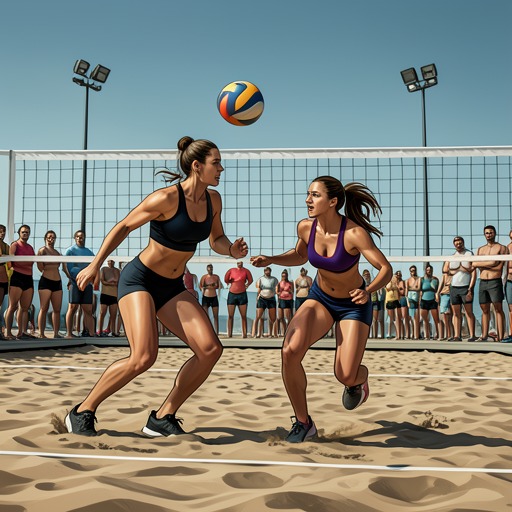
Match PointWilla Ashford—Tabitha Hubbard is a temporary beach-volleyball partnership formed under Olympic pressure and tested by the gap between individual talent and shared play. Willa returns from retirement to preserve the legacy she built with Colleen Sherman; Tabby gets an unexpected chance to compete beside an Olympic champion. In a matter of days, they must become a team, and their early clashes over focus and consent give way to a run of victories. Tabby’s death cuts short that development, leaving Willa to mourn both a young athlete and a partnership whose full potential was never realized.
Formation Under Pressure
Willa’s return to competition was not a routine comeback. After Colleen Sherman disappeared and was presumed dead, Willa had left the sport, taken an unpaid assistant coaching position at a high school, and discovered a new pleasure in teaching. But the United States had one last opportunity to earn a place in the next Olympic Games: the tournament in Serenidad. Prominent executives, sponsors, and donors pressed Willa to compete, and she ultimately decided that the legacy she and Colleen had created should not die with her retirement.
Tabby entered the plan late. Willa and Vic Bello had reviewed videos of possible partners, looking for someone whose style could complement hers. Tabby became available after her regular partner, Denise Salazar, fell and broke two bones in her leg. Although Tabby had competed nationally for four years, she and Denise had achieved only modest success and had not won a major tournament. She was the best available option and readily accepted the opportunity to play with Willa.
The choice was promising but far from certain. Willa had never played against Tabby or Denise, and watching match videos could not establish how the two women would function together. Willa arranged an informal beach practice before their meeting with Vic so she could get to know Tabby and assess her ability directly. She knew that being good players separately did not guarantee they would become a good team: chemistry mattered, and her memories of Colleen set an especially high standard. They had only six days to develop enough cohesion to face the world’s best.
Consent, Focus, and a First Test
Their early partnership was strained by Tabby’s proposal to make a documentary about their run. She had already hired staff and rented equipment, and anticipation had spread on social media. Willa objected to cameras and the distraction they could bring to an effort that demanded complete concentration. More personally, she insisted that Tabby could not make the decision for both of them without her consent. Willa was prepared to end the arrangement and ask Vic to contact another possible partner.
Tabby pleaded for another chance, explaining that this was her shot and asking whether she could remain Willa’s partner if she dropped the show. Willa agreed on a strict condition: no cameras at all. Tabby accepted. The exchange made the limits of their new alliance plain. Tabby’s ambition and eagerness for exposure had to yield to Willa’s priorities, but Willa’s willingness to keep playing with her also showed that the relationship was not reducible to a single disagreement. Their shared purpose survived because they reached an explicit agreement about what the partnership required.
Their first competitive test against Lydia Zeller and Suzette Nupiere offered a more practical measure of compatibility. Willa and Tabby won in two sets, though their opponents were not in top form. During the match, Tabby’s competitive streak emerged when she challenged a line call after letting a ball drop that she believed would land out. The official pointed to the mark in the sand; Willa called Tabby back and tapped her temple, directing her to let the dispute go and return her attention to the game. The moment showed both a source of friction—Tabby’s intensity could pull her away from play—and a developing means of working together: Willa could redirect her teammate toward the next point. Afterward, Suzette told them they would do well together.
Growing into a Team
As the tournament progressed, the partnership gained evidence of its own. Willa and Tabby went undefeated through six wins. Willa did not mistake that record for proof that they had already beaten the best: she recognized that their opponents were not competing at their prime. Even so, the matches gave her a useful gauge of their compatibility, and she began to believe they could reach the final or perhaps win the tournament.
At the international event, the demands grew. Willa and Tabby beat a young Swedish team in their first match, then overcame a strong pair from the United Kingdom in two sets. For the first time since partnering with Tabby, Willa believed they had a legitimate chance at the title. The next day, in the packed main stadium, they faced a scrappy team from South Korea. Tabby ended the match with a kill shot, advancing them to the semifinals against the reigning world champions from Australia.
The run mattered beyond their own ambitions. Australia and Canada had already secured two Olympic places, while the tournament was the last qualification opportunity for both the United States and Serenidad. Willa and Tabby were therefore playing not only to test and advance their new team, but also to keep their country’s Olympic prospects alive. Their results marked a real change from the tentative pairing Willa had assessed in practice: Tabby’s talent was becoming part of a functioning partnership, and Willa’s confidence in that partnership was growing. The available account establishes their semifinal place and the stakes ahead, not the final result of the tournament.
An Unfinished Partnership
The partnership’s development ended when Tabby suffered a fatal injury. In the hospital, while Willa was waiting for news and resting against Colt Fontaine, she remembered that Tabby had said something strange shortly before Corey Baxter arrived. Tabby had apologized for what she had done and thought Willa would understand, but Willa did not know what the apology meant. The words remained unresolved; the account does not specify what Tabby had done or what she expected Willa to understand.
A doctor later told Willa that Tabby had not survived. The tourniquet had helped, but it was inadvertently removed, and Tabby bled out. Willa grieved that Tabby’s life had been cut short, judging that the mistake she had made did not mean she deserved what happened. That response holds the partnership’s tensions together: Willa had demanded seriousness and focus from Tabby, but her final judgment was not a verdict on Tabby’s ambition or errors. It was grief for a person she had not known long and a teammate she had only just begun to trust on the court.
Significance
Willa and Tabby’s partnership is shaped by two kinds of inheritance. Willa carries the athletic legacy she shared with Colleen Sherman and initially sees returning to competition as a way to keep it alive. Tabby, meanwhile, receives a rare opportunity to play beside an established champion. Their alliance has to be built quickly, through practical decisions: Willa’s informal assessment, an explicit rejection of cameras, a shared response to a disputed call, and victories that gradually make belief possible.
The brevity of the pairing gives its progress a sharp edge. Six wins provide a record of success, and the semifinal berth shows that the team advanced far beyond its uncertain beginnings; neither can substitute for the time needed to discover how far the partnership might have gone. Tabby’s death also leaves Willa with an apology she cannot interpret. Their relationship therefore ends without a settled account of its final strain or a chance to turn promising compatibility into a lasting team. What remains is Willa’s recognition of Tabby’s potential, and the loss of a partner whose place in her sporting life was brief but consequential.